
Tag

Alzheimer’s

Managing Dementia’s Side Effects with Essential Oils

By Health, Long-Term Care

Now, more than ever, many are turning to a more holistic approach to medicine. For generations, essential oils have been used to ease symptoms of depression, anxiety, and insomnia.  Some research suggests that aromatherapy and the use of essential oils may be useful in the treatment of certain symptom’s of Alzheimer’s disease and other types of dementia.

Essential oils may be inhaled, applied to the skin, or ingested depending on the type of oil and its level of concentration. It is important to note that although essential oils have been used for generations and are thought to be safe, they are not regulated by the Food and Drug Administration, so you should always consult with your doctor before using to ensure that specific oils will not have any negative reaction with medications.

Some of the essential oils that been shown to be effective in alleviating different symptoms of dementia are:

  1. Lavender

Lavender is said to be calming and able to balance strong emotions. It is also an antidepressant and useful in cases of insomnia. Use it in the evening to promote better sleep, or any time of day to promote better mood.

  1. Peppermint

Peppermint is energizing and can be used to stimulate the mind. It is best used in the morning, and can be inhaled directly, diffused in the room, used as a massage oil, or even placed in a bath.

  1. Bergamot

Bergamot can be used to relieve anxiety, agitation, mild depression, and stress. It is a mood elevating and calming oil, that can also be used to relieve insomnia. It can be placed in a bath, used as a massage oil, diffused through a room, or sprayed on clothing or linens.

  1. Rosemary

Much like peppermint, Rosemary is an uplifting oil used to stimulate the mind and body. It may help improve cognitive performance and mood. Rosemary has also been known to ease constipation, symptoms of depression, and reinvigorate the appetite.

  1. Ginger

Ginger oil is helpful for anyone struggling with digestion issues. It is commonly used to treat a loss of appetite and constipation and can help promote good eating habits. Ginger oil can be applied directly to the skin as an abdominal massage, diffused, sprayed or placed on a compress.

  1. Lemon

Lemon oil is one of the most studied and effective oils. It has been shown to help calm and relax people who are dealing with anxiety and insomnia, improve memory and ease digestion. Lemon oil can be dropped in a bath, inhaled directly, diffused, sprayed or applied directly to the skin as a massage oil.

  1. Ylang Ylang

Ylang Ylang oil can help ease depression while also promoting good sleep. This is a great oil not only for the person living with dementia, but also for caregivers struggling with restlessness and lack of sleep. Ylang Ylang is often combined with lemon oil and can be placed in a bath, inhaled, diffused, or sprayed.

COVID-19: Tips for Caregivers of Individuals with Dementia

By Elder Law, Health

There is no evidence to suggest that dementia itself increases the risk for Coronavirus, just like dementia does not increase risk for flu. However, behaviors, increased age, and common health conditions that often accompany dementia may increase risk. For example, people with dementia may forget to wash their hands or take other recommended precautions to prevent the illness. Viruses like COVID-19 or the flu may worsen cognitive impairment due to dementia.

Caregivers of individuals living with dementia should follow guidelines from the Center for Disease Control (CDC) and consider the following tips:

  • Increased confusion is often the first symptom of any illness for people living with dementia. If your loved one shows rapidly increased confusion, you should contact their health care provider for advice. Unless your loved one is experiencing a medical emergency, such as difficulty breathing or a very high fever, it is recommended that you call their health care provider instead of going directly to an emergency room. Their doctor may be able to treat them without a visit to the hospital.
  • Individuals living with dementia may need extra reminders and support to remember important hygienic practices.
    • Consider placing signs in the bathroom and elsewhere to remind your loved one to wash their hands with soap for 20 seconds.
    • Demonstrate thorough handwashing.
    • Alcohol-based hand sanitizer with at least 60% alcohol can be a quick alternative to handwashing if your loved one cannot get to a sink to wash their hands easily.
  • Ask their pharmacist of doctor about filling prescriptions for a greater number of days to reduce trips to the pharmacy.
  • Think ahead and make alternative plans for care management if the primary caregiver should become sick.

How to Stay Connected to Loved Ones in Nursing Homes During a Pandemic

By Health, Long-Term Care


Family caregivers have now faced weeks or even months of physical separation from their loved ones in nursing homes and other long-term care facilities in order to protect them from Coronavirus. The restrictions on in-person visitation in long-term care facilities during the pandemic have made it challenging for family caregivers to stay close and present in the lives of their loved ones. The lack of family contact and attention can create feelings of isolation and anxiety for a resident, and additional stress for already worried families and friends, who are used to visiting in person.

While you may be unable to visit your loved one in-person, it is possible to brighten their day and try to ease feelings of isolation. Here are some ideas for staying emotionally connected to loved ones while visitor restrictions are in place:

  • Plan a virtual visit. There are several apps that will allow you to meet with your loved one virtually, including FaceTime, Zoom, and Skype. Most facilities are more than willing to assist your loved one in dialing in to a call. Some facilities even have iPads for easier viewing.
  • Send snail mail. Cards and letters are an easy way to tell someone you are thinking of them. Write an update about routine family activities. Have your children draw a picture. Include a photo showing your quarantine activities. Receiving updates will be reassuring to your loved one that you are okay during this health crisis and will provide your loved one with a genuine connection to you.
  • Create a photo book. Create a photo book with photos of what you, family, and friends have been up to. Include captions identifying family members and friends, with a small description. It can be as simple as a few pages printed from your home printer and stapled together, a poster board assortment, or a professionally bound book from Shutterfly or another online printing company. Most facilities will accept envelopes or packages at the front desk and will have staff members deliver to your loved one’s room, or they can always be sent in the mail.
  • Have a window visit. Many facilities will schedule a specific time for your family to “meet” your loved one through a window on the ground floor. You will be on the outside, and your loved one will be safely on the inside. You can chat, share smiles and laughs, and a touch through the glass. You can make special occasions, like a birthday or holiday, extra special with handmade signs.
  • Create a phone chain. Create a schedule of different family members and friends to each call your loved one on a specific day. This is a great way to connect others also feeling isolated, especially seniors and those living alone, with your loved one. Plus, a regular daily phone call gives your loved one something to look forward to.

COVID-19: Tips for Supporting Loved Ones with Dementia Living in Nursing Homes During the Pandemic

By Elder Law, Health, Long-Term Care

There is no evidence to suggest that dementia itself increases the risk for Coronavirus, just like dementia does not increase risk for flu. However, behaviors, increased age, and common health conditions that often accompany dementia may increase risk. For example, people with dementia may forget to wash their hands or take other recommended precautions to prevent the illness. Viruses like COVID-19 or the flu may worsen cognitive impairment due to dementia.


The CDC has provided guidance on the prevention and control of COVID-19 in nursing homes. Precautions may vary based on local situations. If you have a loved one with dementia living in a nursing home:


  • Check with the facility regarding their procedures for managing COVID-19 risk. Make sure the facility has your emergency contact information and contact information for another family member or friend as backup.
  • Do not visit your loved one in the facility if you have been exposed to COVID-19, or have any signs or symptoms of illness.
  • Depending on the situation in your local area, facilities may limit or not allow visitors, in order to protect the residents.
  • If visitation is not allowed, ask the facility how you can have contact with your loved one. Options may include telephone calls, video chats, or emails to check in.
  • If your loved one is unable to engage in calls or video chats, ask the facility how you can keep in touch with staff in order to get updates.

Tips for Handling Alzheimer’s-Related Aggression

By Health

Individuals who are afflicted with Alzheimer’s disease may experience aggression related to their condition. This aggression generally surfaces in the later stages of Alzheimer’s and, while the exact reason for it is unclear, researchers believe it may be symptomatic or due to the frustration and confusion Alzheimer’s patients feel. If a loved one has Alzheimer’s and is beginning to develop aggressive tendencies, it may be difficult to figure out how to handle the outbursts and agitation.


Here is a list of tips to help handle aggressive behaviors in an Alzheimer’s patient:

Remember that what is happening is not their fault and avoid becoming angry

An Alzheimer’s patient may not be able to control their aggression, so do your best not to get angry if they lash out at you. This will only make the situation worse and will likely increase their agitation. Try to remember that what they are experiencing is not in their control and that what they may say or do when angry has no relation to who they truly are.


Learn which situations bring about anger or aggression. 

If you are able to recognize which types of situations make your loved one angry or upset, it is easier to avoid them and to decrease these incidences of anger and aggression. If you are having trouble identifying which situations trigger their anger, keep a journal chronicling times that they become notably agitated or frustrated and look for patterns.


Help your loved one participate in a relaxing activity or a hobby they enjoy. 

By participating in a relaxing activity with your loved one or a familiar hobby that they enjoy, it will calm both of you down and help to reduce your loved one’s confusion. Additionally, it will increase the amount of time that you spend bonding with your loved one and create memories that you will be able to treasure for years to come.


Limit the amount of loud noises and distractions.

Alzheimer’s patients tend to become frustrated by loud noise as well as the occurrence of too many activities going on around them at once. By limiting loud noises and distractions, you can reduce their confusion and agitation while increasing their feelings of peacefulness and control.


Don’t challenge your loved one.

People who suffer from Alzheimer’s tend to become confused and forget or mix up certain information. If your loved one makes a statement that you believe to be incorrect, don’t feel the need to always challenge them on it. This will likely not accomplish much and may only upset them further. If you feel that they are getting information mixed up that isn’t of much importance, it’s not usually necessary to correct them. If the information they are confusing is important, try to notify them of this in a gentle and non-threatening manner.

Can Alzheimer’s be Prevented?

By Health

Alzheimer’s is a devastating terminal illness that occurs due to generalized degeneration of the brain and that has the ability to severely impair an individual’s mental as well as physical faculties. A cure for Alzheimer’s has not yet been discovered, but many health professionals have turned their focus towards lifestyle changes that may prevent Alzheimer’s from ever afflicting individuals’ in the first place. On that note, here are several tips regarding changes that you or a loved one can make that may prevent Alzheimer’s disease.


  1. Participate In Physical Activities.

Exercising regularly can be a beneficial strategy if you want to lower your risk of developing Alzheimer’s. Exercise has the potential to positively affect brain cells by increasing blood and oxygen flow to the brain. Additionally, exercise has cardiovascular benefits and, as several conditions known to increase the risk of cardiovascular disease also increase the risk of developing Alzheimer’s, having a healthier heart may also lead to avoidance of Alzheimer’s.


  1. Consume Healthy Foods

Studies have demonstrated that heart-healthy eating can help protect the brain and reduce the risk of one getting Alzheimer’s disease. Following a dietary regimen that includes limiting intake of saturated fats and sugars while also eating larger amounts of fruits, vegetables and whole grains is a good way to stay healthy.


  1. Maintain Strong Social Connections

Whether it’s choosing to spend more time with children and grandchildren or going out weekly with close friends, studies have shown that maintaining social connections and being mentally active can reduce the risk of Alzheimer’s. Social and mental stimulation fortify the connections between nerve cells in the brain, which may be the reason that a healthy amount of social interactions can prevent the development of Alzheimer’s.


  1. Get Lots of Sleep

New studies have emphasized that long-term sleep issues or disrupted sleep may be a risk factor for Alzheimer’s. Numerous studies have linked poor sleep to higher levels of beta-amyloid, a brain clogging protein that interferes with the deep sleep necessary for memory formation. Studies have also demonstrated that uninterrupted sleep is important because it allows for the flushing out of brain toxins.


  1. Keep Stress Levels Low

Chronic, persistent stress can have a strong, negative impact on the brain and can even lead to shrinkage in an area of the brain that is key when it comes to memory. This alone increases the risk for Alzheimer’s, but stress can also be detrimental to nerve cell growth, which only furthers the likelihood that an individual will develop this. If you find yourself stressed-out often, try to participate in activities that relax you and will alleviate some of your stress. Examples of relaxing activities to participate in are: meditation, reading a favorite book, going for a walk, taking a hot bath, getting a massage, writing down daily thoughts in a journal, listening to soothing music and taking a nap.


  1. Prevent Head Trauma

Researchers and medical professionals have suggested that there is a strong positive correlation between risk of Alzheimer’s and serious head trauma. Although you may not think you will ever be exposed to head trauma, it can be caused by fairly normal occurrences such as falls or car accidents. You can reduce your risk of head trauma by “fall-proofing” your home, being aware of your surroundings, wearing your seatbelt anytime you get in a car and using a helmet if you plan on participating in sports or any physical activity that may require head protection.

How Pets Can Help Alzheimer’s Patients

By Health

While pets bring companionship, fun and love into any individual’s life, they can be extremely beneficial to a person battling Alzheimer’s disease. The presence of a pet can help reduce anxiety, agitation, irritability, depression and loneliness in an Alzheimer’s patient, while also helping them become more socially interactive. Pets such as dogs can also increase the motivation for an Alzheimer’s patient to exercise, as dogs need to be walked and taken-out regularly. Additionally, if Alzheimer’s is fairly advanced in an individual, a service animal can be very beneficial and can help them complete everyday tasks that they would be unable to perform on their own. Additionally, pets have been linked to health benefits such as lowering blood pressure, reducing heart rate, decreasing levels of cortisol (the stress-hormone), and boosting level of serotonin (the mood-boosting hormone).

World Alzheimer’s Day

By Health

Today is World Alzheimer’s Day, and we want to raise awareness regarding this multifaceted disease. Alzheimer’s disease is a progressive and irreversible disorder in which a person’s brain cells deteriorate over time. Alzheimer’s usually occurs in individuals over 65, although younger-onset Alzheimer’s can appear in an individual as young as 30. Approximately 1 in 8 people that are 65 or older have Alzheimer’s disease. Alzheimer’s can cause memory loss, coordination issues, mood swings, disorientation, trouble focusing and a decline in reasoning skills. Alzheimer’s is ultimately a terminal illness, but it progresses at different rates in different individuals. This means that a person who is diagnosed with Alzheimer’s can live anywhere from several years to several decades. Although this condition cannot be cured, treatment can help alleviate its symptoms and slow its progression. If a loved one starts showing possible signs of Alzheimer’s, the best option is to take them to see a doctor immediately and get the condition treated. The best way to fight Alzheimer’s is to be aware of its signs and to realize quickly if a loved one is experiencing symptoms. The earlier Alzheimer’s is found, the easier it is to treat and the smaller the likelihood that it will progress rapidly.  

Is Alzheimer’s Disease Fatal?

By Health

Alzheimer’s disease is a sadly prevalent illness that most commonly affects senior citizens. It destroys brain tissues and causes memory changes as well as erratic behavior and loss of body functions. Though Alzheimer’s can progress slowly and have limited symptomatic effects when first diagnosed, it is a terminal illness. Alzheimer’s is the sixth leading cause of death in the United States and is among the top 10 diseases in the nation that cannot be reversed or cured. The Alzheimer’s epidemic is greater than ever, as more than 5 million people in the U.S. have this disease. Additionally, deaths resulting from Alzheimer’s disease have increased by 68% between 2000 and 2010. As Alzheimer’s progresses, an individual loses their memory as well as their mental and physical function. It is the loss of these functions that ultimately leads to death. Although Alzheimer’s cannot be cured and is fatal, there are treatments available to delay its symptoms and improve the quality of life of Alzheimer’s patients.

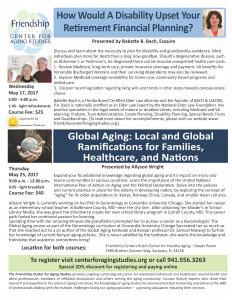
Babette Bach to speak at the Friendship Center on: “How Would A Disability Upset Your Retirement Financial Planning?”

By Asset Protection Planning, Firm News

Babette Bach will be speaking at the Friendship Center, 1888 Brother Geenen Way, event at 2:00pm on Wednesday, May 17th, 2017.  The topic is “How Would A Disability Upset Your Retirement Financial Planning?”. In this hour long program Babette will discuss the necessity to plan for disability and guardianship avoidance. Additionally, she will discuss recent legislation regarding living wills and trends in other states towards compassion choice. For more information on this event, please go to: www.friendshipcenterforagingstudies.org. and click the following link to see the flyer for this event: fcas-may-2017-bach-wright