Tag

Asset Protection Planning

Long term care planning series: Planning Before a Crisis

By Long-Term Care

The best long term care options are available through early planning. We care a great deal for our clients and try to help make transitions as seamless as possible for them. We recommend planning prior to these issues, so that when difficult issues arise things go as smoothly as possible. Typical estate planning involves the distribution of a person’s assets after they pass away. Here at Bach and Jacobs we have additional focus on end of life planning and encourage you to contact us to review your plans before crisis hits. However, we will also help you navigate emergency senior care issues as well. Because we want to help you plan for all of life’s possibilities and protect you and your investments, we include irrevocable trusts that are designed specifically for that purpose.

If you have further questions, contact our office at: 941- 906-1231 to schedule an appointment with one of our attorneys.

 

Medicare vs. Medicaid: What are you eligible for?

By Medicaid Planning, Medicare

Medicare is a federally funded program for which most U.S. citizens and permanent legal residents over the age of 65 who have lived in the country for over five years are eligible for. Medicaid, among other things, supports individuals and families by covering costs associated with both medical and long-term custodial care for those who qualify. Eligibility for Medicaid is means-based, and the program has strict asset and income eligibility requirements that vary from state to state. For more information on current qualification requirements, individuals should visit Medicaid.gov. Additionally, Babette Bach is a Board Certified Elder Lawyer and can assist you with your questions about public benefits and qualifications for Medicaid.

Estate Planning for Same-Sex Couples in Florida: Tax Filing

By Asset Protection Planning, Estate Planning, Tax Law

Because same-sex married couples are now federally recognized, they can file joint tax returns. The  IRS also recognizes federal tax provisions which include income tax credit, child tax credit, and employee benefits.

Spousal exclusion now applies to same-sex couples, which permits partners to leave property to the surviving spouse without having to pay estate taxes when the first spouse passes away.

The 2015 ruling, Obergefell v. Hodges, also made amends to states’ intestacy statutes. Now if a same-sex spouse dies without making a will, the surviving same-sex spouse will inherit some of the assets of the deceased spouse and receive other benefits formerly only available to heterosexual couples such as homestead protection.

Questions to ask before retirement

By Asset Protection Planning, Estate Planning, Government Benefits, Long-Term Care

For many seniors, retirement is a time of relaxation and having opportunities to explore their interests and the world. But before making the transition into retirement, there are some questions that you and your spouse should discuss.


  • What is the best time for my retirement? There are several factors you and your loved ones should consider before making the decision to retire. A large topic to discuss is how best to maximize your Social Security spousal benefits. You should also assess your family’s financial needs and consider the ways in which your retirement could impact your loved ones.
  • What lifestyle do I want to pursue? Everyone has a different vision for retirement. While some wish to travel the world, others plan to stay close to home. By having an idea of your lifestyle, you can properly prepare for your retirement.
  • How do I plan for long-term care? Planning for long-term care can be a long process. It is a good idea to meet with an elder law attorney to properly construct a plan. Planning ahead can save time and money and reduce unnecessary stress. Planning for long-term care involves setting up end-of-life documents, finding the right assisted living facility if necessary, and getting the best healthcare coverage for your needs.


If you wish to set up estate planning documents or plan for your retirement and end-of-life decision-making, please contact our office at (941) 906-1231 to speak with one of our attorneys.


What is a Pooled Trust?

By Asset Protection Planning, Government Benefits, Medicaid Planning

A first-party supplemental needs trust is created to allow disabled persons to receive the benefit of their funds in a trust while still qualifying for and receiving government benefits. An alternative to this trust is a pooled trust. A pooled trust is created by a non-profit organization, and individual beneficiaries can create accounts within the trust.

By pooling the assets of disabled persons, the organization can manage one master trust and maximize the benefits for the beneficiaries. The non-profit can make more stable investments and provide more services than a normal supplemental needs trust.

Most people with special needs join a pooled trust when they do not have anyone to create a first-party supplemental needs trust for them. And just like a first-party supplemental needs trust, a pooled trust is used for people to qualify for and remain eligible to receive government benefits, such as Medicaid and SSI.

A couple advantages of a pooled trust are the low costs and the fact that the funds will be used to help others with disabilities.

If you have further questions on this topic, contact our office at (941) 906-1231 to schedule an appointment with one of our attorneys.

Estate Planning for Same-Sex Couples in Florida

By Asset Protection Planning, Estate Planning, Government Benefits, Tax Law

 The U.S. Supreme Court rulings in the 2013 Windsor v. U.S. and the 2015 Obergefell v. Hodges cases resulted in changes for same-sex couples in areas such as estate planning and tax filing.

It is important that same-sex couples living in Florida take the proper steps in their estate planning, and specify key details that will ensure their protection under the law.  Such planning may include creating estate planning documents such as a last will and testament, or Revocable Trust, durable power of attorney, living will, and a designation of pre-need guardian.

How to Prevent Property from Getting Lost and “Unclaimed”

By Asset Protection Planning, Estate Planning

In the last few blogs, we discussed the process of finding and claiming lost property. However, there are safeguards and steps to follow in order to prevent your property from getting lost.

Because property goes unclaimed due to the absence of communication between the financial institution and the owner of the account, you should contact the institutions each year and notify them of any changes to your address, financial matters, or marital status.

It is also imperative to maintain detailed and accurate financial records. These records should also include records of bank account numbers, types of accounts, insurance policies, and stock certificates.

After receiving checks such as for wages, dividends, and insurance settlements, make sure to cash them without delay. Also, if you have a safe deposit box, record its number, bank name, and provide the extra key to a person you trust.

Lastly, you should prepare a Last Will and Testament that sets up the distribution of your assets. To create or update these documents, contact our office at (941) 906-1231 to schedule an appointment with one of our attorneys.
Claiming Lost Property in Florida

By Asset Protection Planning, Estate Planning

To claim lost property, go to your state’s unclaimed property administrator’s office. There you will find the proper instructions and forms. If you are a Florida resident, go to https://www.fltreasurehunt.org/.

The claim forms may require certain documentation such as a copy of current identification and proof that you are the owner of the account. The Florida Department of Financial Services may take up to 90 days to make a determination about the claim.

If you are a guardian or acting as an agent for someone under a durable power of attorney, you can complete a search on behalf of the individual for whom you advocate, if you are authorized to do so.  To claim the property as a guardian, you may be required to provide a copy of the documents appointing you as guardian or power of attorney to ensure you actually have the authority to do so.

And for executors of an estate or personal representatives, you should also search for any unclaimed property of the deceased individual. Unlike the process for guardians and agents, the search process may be more difficult for executors and personal representatives due to the documents that you must produce. However, Bach & Jacobs, P.A. represent and assist executors and personal representatives in the administration of estates, including ancillary administration, and can guide you through the process.

Babette Bach Esq. Will Be a Guest Speaker at Event on March 31st, 2017

By Firm News, Health

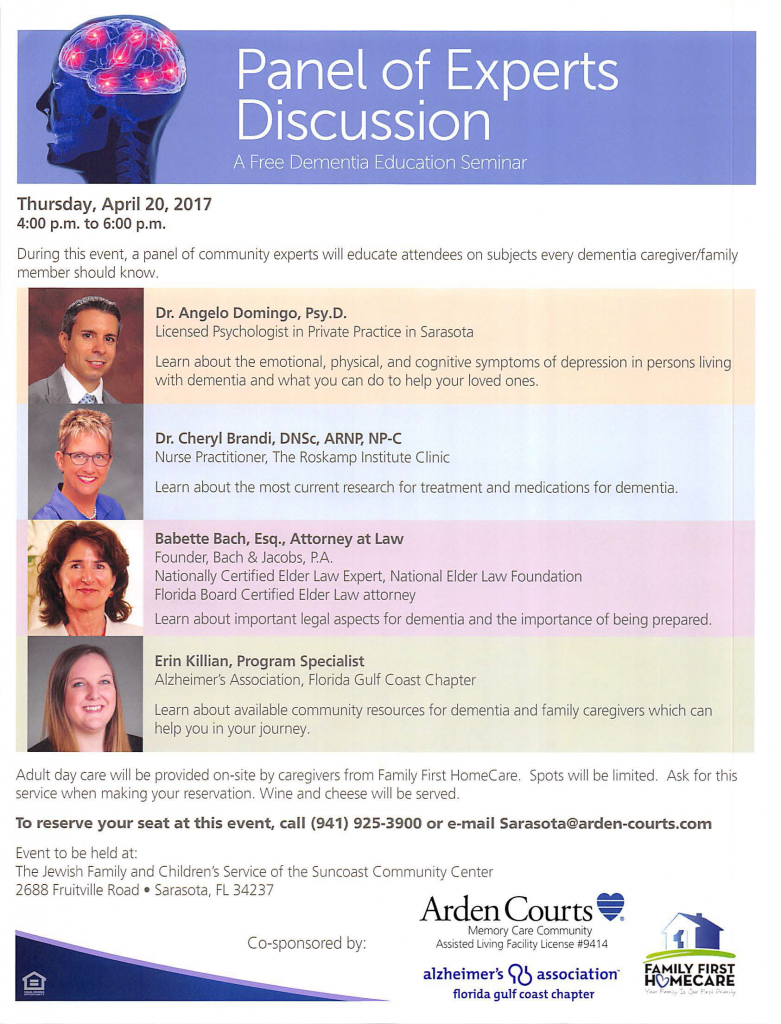
Attorney Babette Bach, Esq. will be a keynote speaker at an event at JFCS of the Suncoast entitled “A Legal & Financial Presentation & Discussion with The Alzheimer’s Association & Babette Bach, Esq”. This event will take place on March 31st, 2017 from 10:30am to 12:00pm and is presented by the Alzheimer’s Support & Education Network. Please see the event flyer and call 941-364-7508 for more information.

caregiver-education-march-2017