Category

Elder Law

As co-agents appointed with Durable Powers of Attorney, can each agent act independently?

By Elder Law, Estate Planning

We turn to Florida Statute §709.2111 to answer this question. Sub-section 1 states, “A principal may designate two or more persons to act as co-agents. Unless the power of attorney otherwise provides, each co-agent may exercise its authority independently.” So, while there are certainly exceptions to the rule (when specified in the Durable Power of Attorney itself), co-agents can indeed act separately from one another. However, you should be aware of the drawbacks of having two agents acting independently with your assets.

To have a Durable Power of Attorney prepared for you and discuss the implications of your choice of agents, or to review your existing documents, do not hesitate to call the attorneys at Bach, Jacobs & Byrne, P.A. at (941) 906-1231 to set up an appointment.

 

Which common policy terms should I compare when purchasing long-term care insurance?

By Asset Protection Planning, Elder Law, Long-Term Care, Medicaid Planning

Long-term care insurance policies are not standardized from insurer to insurer, and thus the policies differ in many ways. There are, however, key provisions used across the board by Florida long-term care insurers. The American Health Care Association specifies that, in Florida:

-“Long term care policies… may cover at least 24 months of skilled, intermediate or custodial nursing home coverage supervised or recommended by a doctor.”

– “Long term care policies or certificates must provide at least one lower level of care, such as home health care or adult day care. The benefits for this lower level of care must have at least half the benefits of the nursing home care, in both the benefit period and the benefit amount.”

Beyond these, common policy points to be considered when comparing long-term care insurance policies include the following:

-Reimbursement levels

-Covered services

-Daily benefit amount

-Benefit period

-Payment options

-Inflation protection

Online, one can find many useful tools to help ensure that you are taking all relevant factors into consideration when purchasing long-term care insurance. Some of these tools include the free Long Term Care Partners, LLC “Benefits and Features Worksheet,” as well as the website for the National Association of Insurance Commissioners. An FAQs sheet from the state agency regarding Medicaid can be found here: https://ahca.myflorida.com/Medicaid/ltc_partnership_program/pdfs/Florida_LTCP_FAQs_7-26-11.pdf.

Watch Out for Unlicensed Medicaid Planners

By Elder Law, Medicaid Planning

It has become sadly more common in Florida for unlicensed individuals that have never obtained a law degree to offer Medicaid planning services to senior citizens. These individuals are unqualified and lack the knowledge as well as the skills needed to provide effective Medicaid planning services. Sometimes, senior citizens choose to use these unlicensed planners because they believe it will be cheaper, but many of these individuals charge the same price an attorney would for sub-par work that doesn’t end up helping someone become eligible for Medicaid. In Florida, an individual who is not a lawyer may not provide legal advice regarding qualifying for Medicaid benefits, draft a personal service contract, determine the need for, draft or execute a qualified income trust or sell qualified income trust kits. In Florida, the unlicensed practice of law is a felony punishable by up to five years in prison.

Unlicensed Medicaid planners often give seniors bad advice that causes them to waste their money or take actions that won’t actually help them qualify for Medicaid. If you use an unlicensed Medicaid planner, it is more than likely you will end up having to meet with an attorney to fix the shoddy work that they have done. Additionally, if these Medicaid planners give you advice that is not correct, this could result in a Medicaid penalty period, which means you would have to wait even longer to receive Medicaid benefits. When it comes to planning for Medicaid, it is important to use a trusted legal professional that understands the ins-and-outs of the Medicaid program and will ensure that you are able to qualify for Medicaid. The attorneys of Bach, Jacobs, & Byrne, P.A. have extensive experience in Medicaid planning. To schedule an appointment, contact our office at: 941-906-1231.


Are “Deathbed Wills” Valid in Florida?

By Elder Law, Estate Planning

A deathbed Will is one developed and executed when the individual creating the Will is facing imminent death. A deathbed Will may be created if someone experiences a rapid decline in health, whether it be due to an illness, accident or other factor, and does not have a current Will and/or estate plan in place. As long as the individual creating the Will is competent, a deathbed Will is considered as legally binding and valid in Florida as one that is drawn up in advance at an attorneys’ office. If a person is not competent at the time they create the deathbed Will or appears to have been unduly influenced by another individual, complications will likely arise, and the Will may be proven invalid in court.

Attorney Sean Byrne is a trust and probate litigator. Whether you are challenging or defending a Will or trust, you can contact Bach , Jacobs, & Byrne, P.A. to discuss your various legal options with regard to a Will or trust contest.


How to Correct a Death Certificate in Florida

By Elder Law, Probate

In order to correct a death certificate, you must submit a request to the Bureau of Vital Statistics in Florida. This request must include the following documents: an Application For Amendment To Florida Death Record (DH524), the Affidavit Of Amendment To Certificate Of Death (DH433) and documentary evidence where required. While the Affidavit can be used to correct a range of minor errors, corrections that require additional documentary evidence include: name of deceased (other than a misspelling), date of birth (changed more than three months), citizenship from alien to U.S. citizen and name(s) of parents (other than misspelling).

Suggested source of documentary evidence include: a birth certificate, school record, census record, social security record, passport, driver’s license, employment record, insurance record, medical treatment record and a voting registration record.

If you need assistance or have further inquiries regarding this matter, visit the Bureau of Vital statistics website for Florida.


Babette B. Bach, Esq. Receives the Lifetime Achievement Award

By Elder Law, Firm News

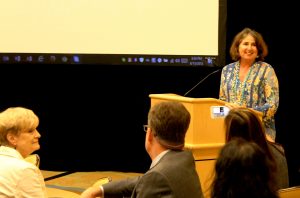
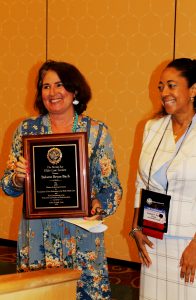
Babette B. Bach, Esq. received the Lifetime Achievement Award from the Florida Bar Elder Law Section during the Florida Bar’s annual convention in Orlando on June 15.  Babette was presented with the award by current chair Collette Small and past chair Emma Hemness, who gave a personal introduction.  In her acceptance speech, Babette spoke about the importance of having a progressive management style that inspires loyalty from staff and clients.  Babette’s family and law firm staff were in attendance for the award ceremony in Orlando. Babette is a Florida Bar Board Certified Elder Lawyer and a Certified Elder Law Expert by the National Elder Law Foundation.  Babette was the Chair of the Florida Bar Elder Law Section from 2009 to 2010 and the Chair of the Sarasota County Bar Association’s Estate Planning and Probate Section from 2016-2017.  She is the founder of Bach, Jacobs, & Byrne, P.A. in Sarasota.

World Elder Abuse Awareness Day

By Elder Law, Health

Today is World Elder Abuse Awareness Day. In Florida, with the growing senior population, elder abuse is an extremely prevalent social issue. Elder abuse can manifest itself in many forms, including but not limited to: physical abuse, emotional abuse, sexual abuse, exploitation, negligence and abandonment. Approximately 1 out of every 10 Americans over 60 has experienced a form of elder abuse, while only 1 out of every 14 cases of elder abuse is reported. Elderly individuals who have been mistreated have a 300% higher risk of death compared to seniors who have not been abused. Elder abuse can be prevented by educating seniors, health professionals, caregivers and families across the nation about this issue.

 If you suspect or know of any elder abuse that is occurring, report it immediately to the Florida Abuse Hotline, which receives reports 24 hours a day. You can also call 1-800-962-2873 or visit https://reportabuse.com.dcf.state.fl.us and file a report online.


The New Estoppel Law

By Elder Law, Real Estate

Estoppel is the legal principle that prevents an individual from making assertions that are contradictory to their previous statements before the court or are contradictory to what has legally been established as the truth. Estoppel can operate by way of stopping someone from making a certain assertion in court, exercising a certain right, or from bringing a particular claim. In spring of 2017, two new bills related to estoppels in the context of homeowners associations cleared both Florida legislative chambers and have been in effect since July 1st, 2017. These bills are Senate Bill 398 and House Bill 483.

The following bullets explain the most noteworthy components of the legislation and the changes that these bills have made:

  • Associations have 10 days to produce an Estoppel certificate
  • Estoppel certificates must be valid for at least 30 days
  • Estoppel certificate fees cannot exceed $250 and rush fees cannot exceed $100
  • No fees may be charged for amending Estoppel certificates
  • Clarifies what must be included in an Estoppel certificate (more information must now be provided to the purchaser by the association)
  • Associations may still charge fees, but may be required to reimburse them if the property is not sold

These new bills are beneficial to title agents, buyers, sellers, closing agents and realtors by keeping costs lower and making the overall estoppel process move more quickly. Bach & Jacobs, P.A. provides title insurance of closing services for real estate transactions and can assist you if you purchase or sell real estate that is part of a homeowners or a condo association.

National Elder Law Month

By Elder Law, Firm News

May has been designated as National Elder Law Month by the National Academy of Elder Law Attorneys. Elder Law is a broad field of legal practice that encompasses important life processes including, but not limited to: Estate Planning, Medicaid, Tax Law, Probate Administration and Asset Protection Planning. We would like to thank the talented attorneys at Bach & Jacobs for their commitment to providing service of the utmost quality in the field of Elder Law as well as the clients that make their jobs possible. Happy National Elder Law Month!

For assistance regarding any Elder Law needs, contact our offices at 941- 906-1231 to schedule an appointment with one our attorneys.

What are the Responsibilities of a Health Care Surrogate?

By Elder Law, Estate Planning

A health care surrogate is someone appointed to make healthcare decisions for you should you become incapacitated or unable to make them for yourself. When you appoint someone as your health care surrogate, be sure to inform them of this designation and make them aware of the responsibilities they may be faced with.

Any decision to give, withhold, or withdraw informed consent to any type of healthcare may become a responsibility for your health care surrogate if you become incapacitated. These include, but are not limited to:

  • Medical and surgical treatments
  • Life-prolonging interventions
  • Organ donation
  • Deciding where medical treatment will be received
  • Psychiatric treatment
  • Making decisions regarding end-of- life procedures
  • Approving release of medical records
  • Communicating with other loved ones or family members about your medical treatment

For inquiries in regard to this matter, please contact our office at: 941-906-1231 to schedule an appointment with one of our attorneys.